






Creating a comfortable and productive home office space is essential for anyone working remotely or spending significant time at home focusing on professional tasks. A well-designed workspace can improve concentration, reduce stress, and even boost creativity. This guide offers practical tips to help you set up a home office that supports both comfort and productivity.
Choosing the Right Location
Selecting the perfect spot for your home office is the first step. Ideally, choose a quiet area away from household distractions. If space is limited, a corner of a room or a section of the living room can work well, provided the environment promotes focus.
Consider natural light when picking your workspace. Exposure to daylight has been shown to improve mood and energy, which can enhance productivity. Position your desk near a window if possible, but be mindful of glare on your screen.
Ergonomic Furniture for Comfort and Health
Comfort is key when working long hours. Invest in an ergonomic chair that supports your lower back and encourages good posture. Adjustable features such as seat height, backrest tilt, and armrests are beneficial to find the best personal fit.
Your desk should be at a height where your forearms are parallel to the floor when typing. If a traditional desk is not possible, consider a sit-stand desk to switch between sitting and standing throughout the day, which helps reduce fatigue.
Organising Your Workspace
A clutter-free environment can enhance focus and efficiency. Use shelves, filing cabinets, and desk organisers to keep papers and supplies neatly arranged. Label storage to quickly find what you need without distractions.
Cable management is also important to maintain a tidy desk. Velcro straps or cable clips can prevent cables from tangling and keep your workspace looking organised.
Lighting: Balancing Natural and Artificial Sources
While natural light is preferable, you’ll likely need supplementary lighting, especially in the evening or in windowless rooms. A desk lamp with adjustable brightness and a warm tone helps reduce eye strain and creates a cosy atmosphere.
Avoid harsh overhead fluorescent lights. Soft, diffused lighting tends to be easier on the eyes and can contribute to a more inviting workspace.
Technology and Tools
Equip your office with reliable technology that suits your work requirements. A good-quality computer, a fast internet connection, and accessories such as a keyboard, mouse, and headphones improve productivity.
Consider tools that help reduce distractions, such as noise-cancelling headphones or productivity apps that manage your tasks and time effectively.
Personal Touches and Motivation
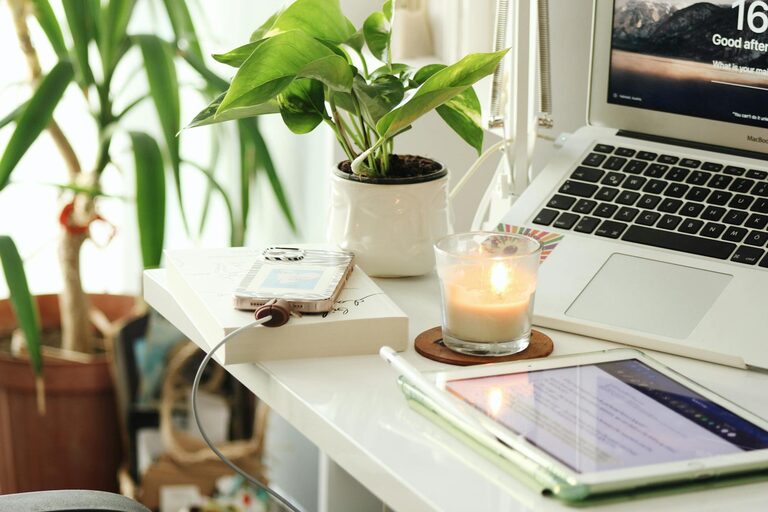
Adding personal items like plants, photos, or artwork can make your home office more inviting and boost your morale. Plants not only decorate but also improve air quality and add a touch of nature.
Keep motivational items like quotes or goals visible to remind you of your purpose and maintain focus throughout the day.
Managing Noise and Distractions
If ambient noise is an issue, use soundproofing methods like rugs, curtains, or acoustic panels to dampen sounds. Alternatively, playing background music or white noise can help mask distractions.
Set boundaries with family members or housemates regarding your working hours to minimise interruptions.
Establishing a Routine and Break Zones
A consistent routine helps signal the start and end of your workday, promoting a good work-life balance. Designate breaks and, if space allows, create a separate area for relaxing away from your desk.
Regular breaks improve concentration and reduce eye strain. Stretching exercises or a short walk can re-energise you for the next task.
Staying Organised Digitally
Keep your digital files organised just as you do with physical documents. Use folders, backup important data, and maintain a clean desktop to quickly find the information you need.
Cloud storage solutions allow you to access your work from multiple devices and provide peace of mind with data security.
Final Thoughts
Creating a comfortable and productive home office involves thoughtful planning and ongoing adjustments. By choosing the right space, investing in ergonomic furniture, organising your environment, and managing distractions, you can develop a workspace that supports your well-being and helps you work efficiently. Start with small changes and adapt your office to your evolving needs to create a space you enjoy spending time in.